01
Structured records
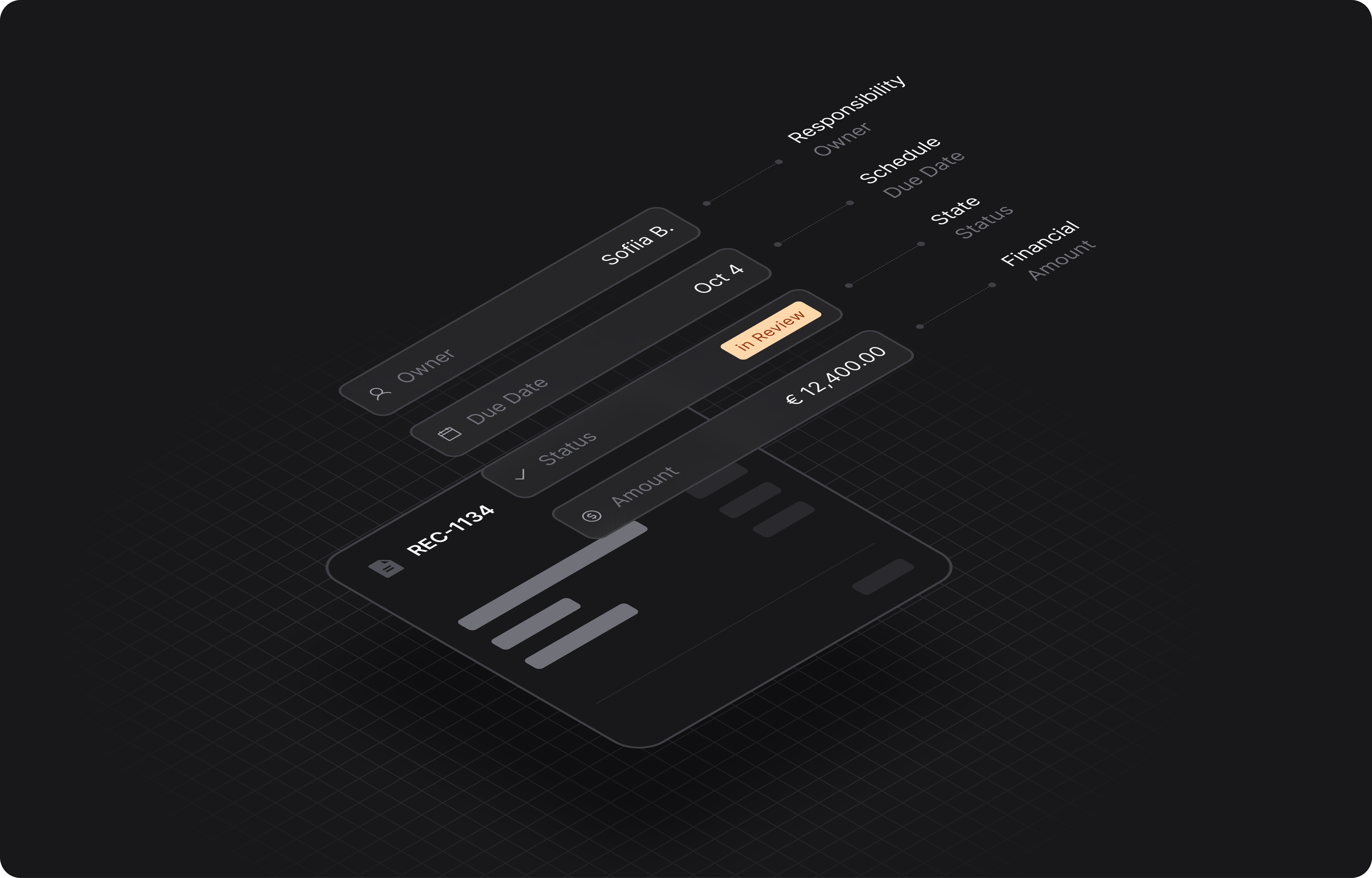
Data is structured as records with defined fields, relationships, and a clear role in the workflow.

Six product areas work together as layers of one system: operational interfaces, workflow logic, data and records, users and roles, connected systems, and activity visibility.
L3RA is the operational layer where business workflows, structured records, users and roles, and connected systems are configured and maintained together. Not a builder. Not an automation tool. Not an AI platform.
Operational work that used to live across half a dozen vendors moves into one place. Processes, records, and access are configured together. Surrounding systems remain — they connect to L3RA instead of replacing it.
Configured inside L3RA. No need to glue together automation chains across multiple vendors.
Modelled as structured records inside the operational layer — not scattered across CRMs, ticket systems, and spreadsheets.
Users, roles, and groups defined once, applied across interfaces, records, and actions.
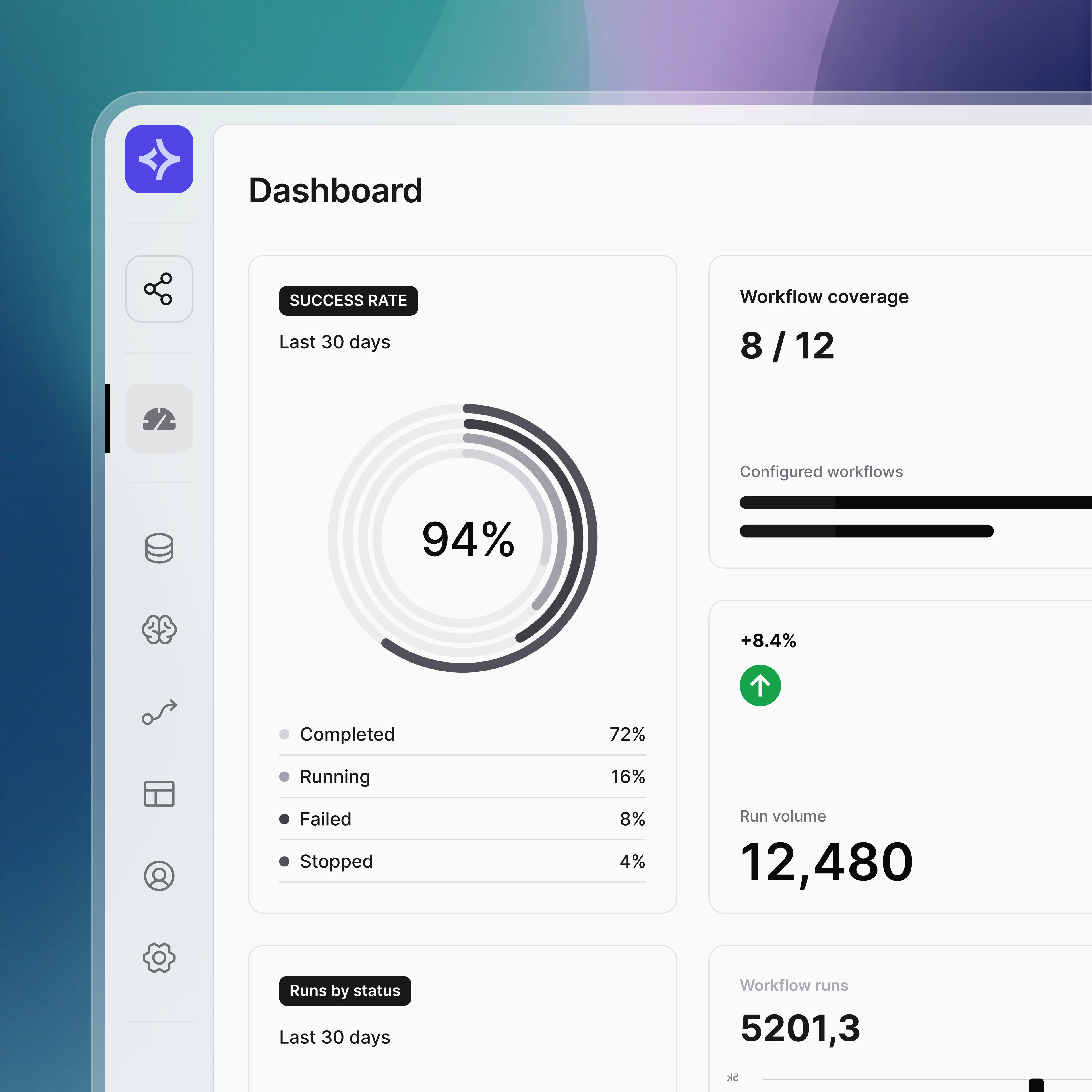
Operational dashboards and activity history are part of the layer — not separate BI tools bolted on the side.
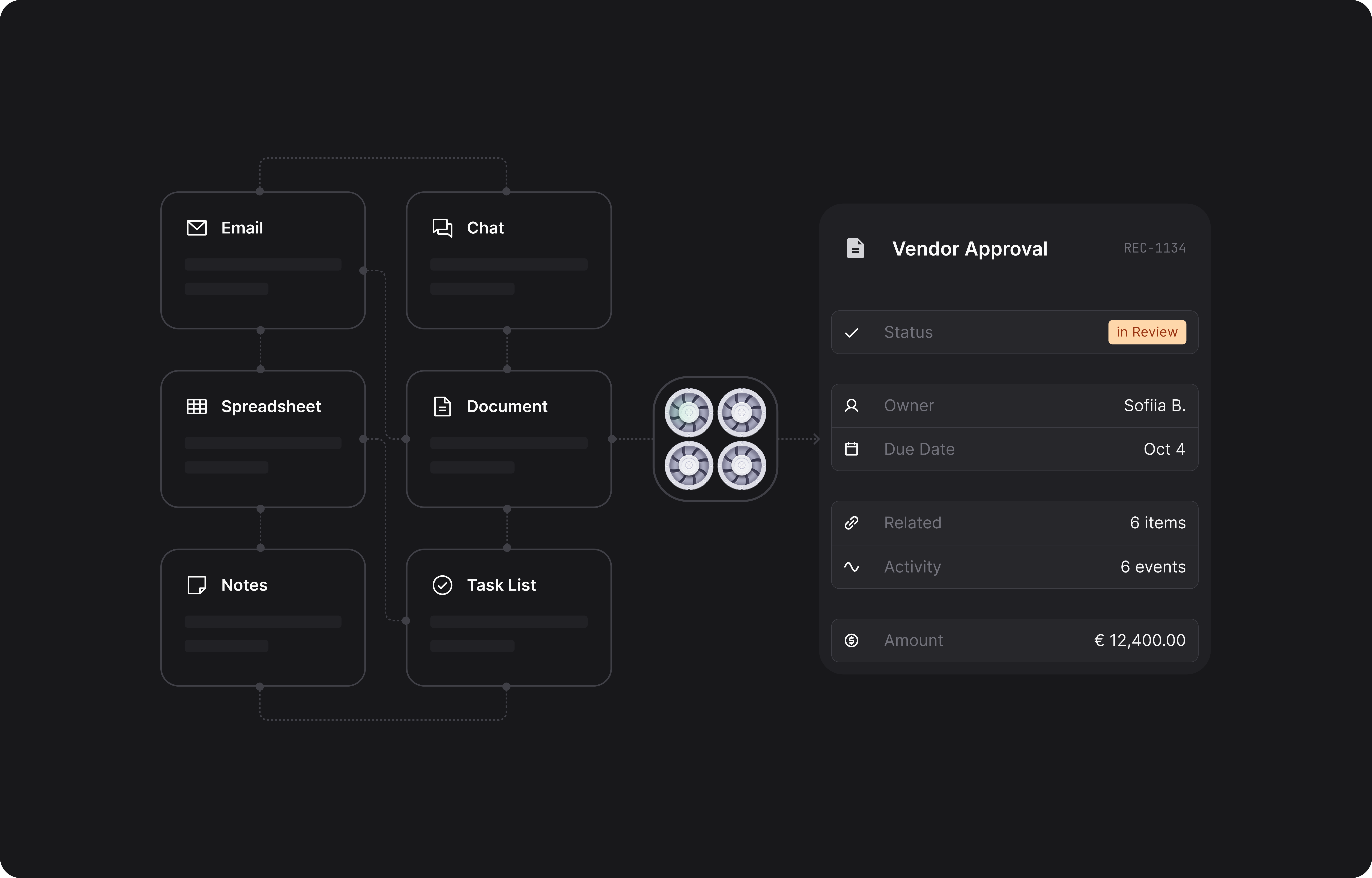
The company owns how the work is modeled. Processes, records, access, and connected systems are configured around how it actually operates.
Data is structured as records with defined fields, relationships, and a clear role in the workflow.
Workflows and conditions are configured inside L3RA. The path is defined where the work actually runs.
Users, roles, and groups reflect organizational responsibility. Access is part of the operational layer — not a separate matrix maintained on the side.
The layers below show what L3RA controls. Each layer can be configured around the company’s workflows, records, roles, connected systems, and activity history.
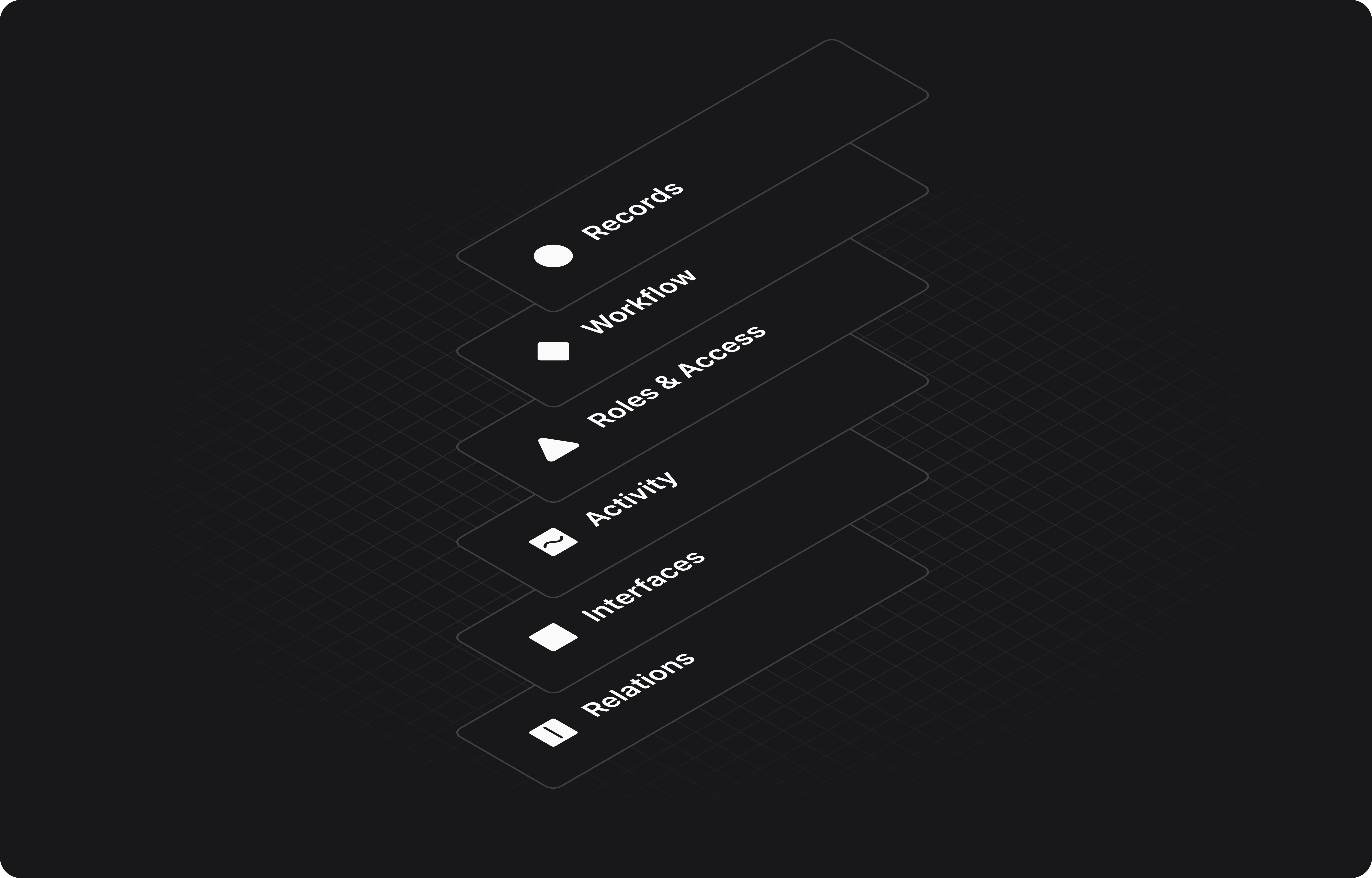

Surfaces where users submit requests, act on records, and see the state of the work.

How a process moves: ordered steps, status gates, conditions applied at the right points.

Structured records with defined fields and relationships — not raw rows.

Who is in the system, what they can act on, what they can see, what they are responsible for.

How L3RA connects to surrounding systems without turning the work into a brittle automation chain.

What happened, who acted, and in what context — recorded with the work itself.
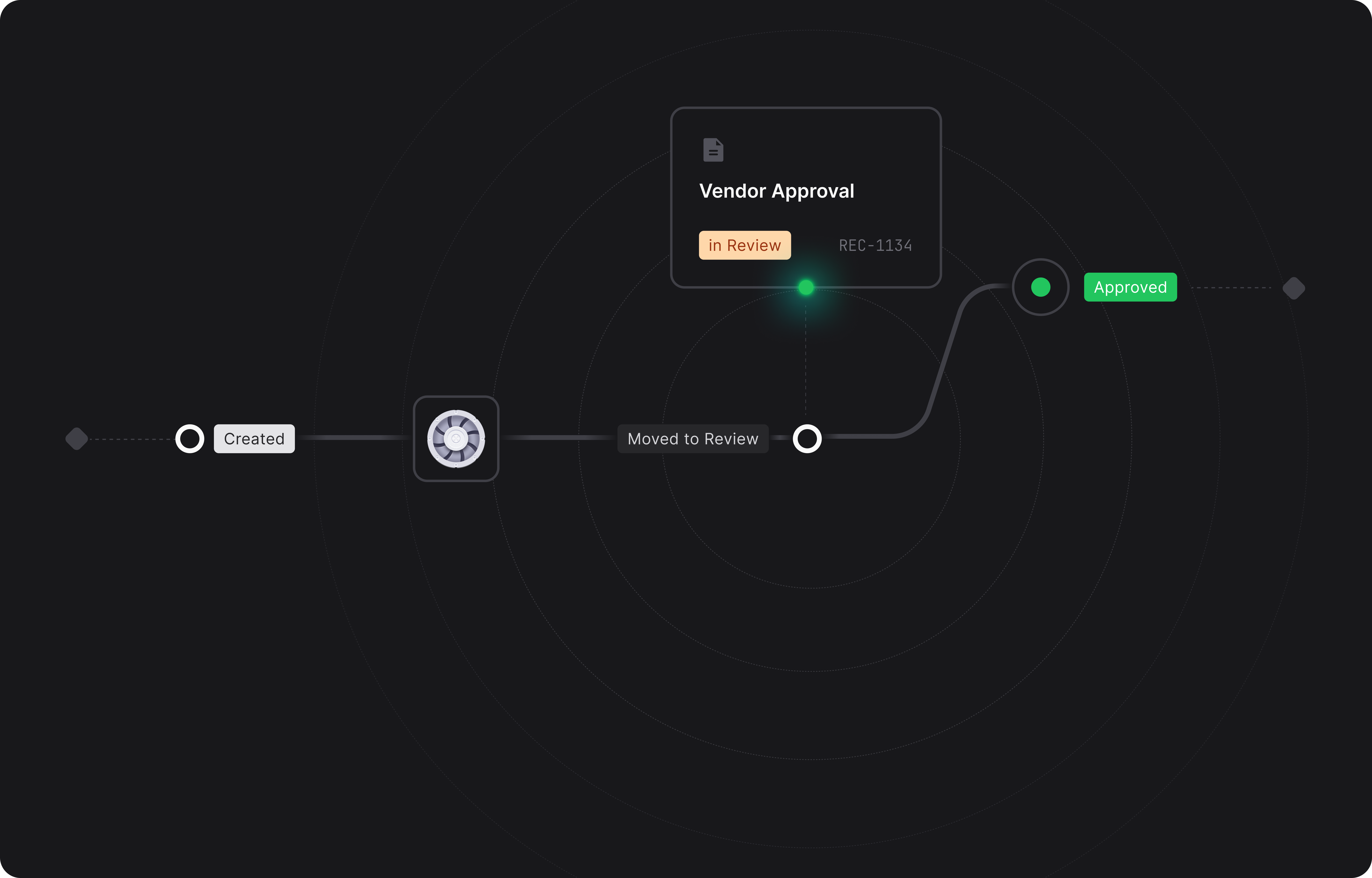
A request moving through L3RA shows how the layers work together. The same pattern can support an approval, a service request, a partner submission, or an internal handoff — only the content changes.